| THE HOLY BYZANTINE KATHOLIC ORTHODOX CHURCH A TRADITIONAL COMMUNITY EASTERN RITE / RITES DE L'EST / RITO DEL ESTE |

 |
| |
 |
| |
 |
| |
 |
| |
 |
| |
 |
| |
 |
| |
 |
| |
 |
| |
 |
| |
 |
| |
 |
| |
 |
| |
 |
| |
 |
| |
 |
| |
 |
| |
 |
| |
 |
| |
 |
| |
 |
| |
 |
| |
 |
| |
 |
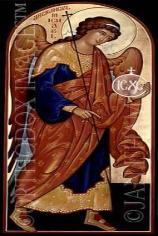
The Holy table is separated by an iconostasis, intimating that the mystery celebrated in the Eucharist transcends even the community that
has gathered for the celebration. The Church is not only the assembly of those living here and now, but also encompasses the "heavenly
Jerusalem" (Hebrews 12:22). It is not to be self-enclosed, self-satisfied "association," but rather a pilgrim people, continually looking
Preparation for the Liturgy
Before the journey to the kingdom can begin, people must be ready. We cannot schedule encounters with God: we can only prepare for
them. Therefore, the official liturgical texts of the Byzantine Churches insist:
"He who intends to celebrate the Divine Mystery should be reconciled first of all with everyone and have no animosity toward anyone. To
the best of his ability, he must keep his heart clean from evil thoughts. He should abstain starting the night before and maintain a spiritual
concentration until the time of the celebration."
Prayer, fasting and reconciliation - these are the preconditions for a sincere participation in the Eucharist.
The following is a diagram of the Divine Liturgy:
Introductory:
Processions serve many purposes, including marking our journey to the kingdom, focusing us on why we have gathered,
reminding us of primary symbols of our faith, and calling us to enter into formal ritual. There are special prayers and the
veneration of Icons of Our Lord representing the New Testament and Blessed Mother and Child representing the Old
Testament during this time. It is by the Word of God that we the Church are brought to the presence of Our Most Holy
Father in heaven.
Vesting Rite:
The priest with court will enter the Sanctuary by the side door and goes and vest, this reminds the congregation of the new
garments are Lord will provide thus who will be in His glories presences in the New Jerusalem
The Preparation:
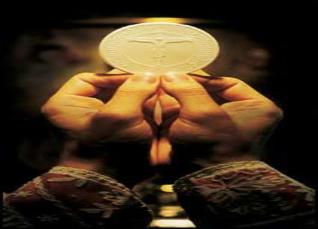
The priest washes his hands and reads the prayers of Preparation. On the table of Preparation are the sacred utensils: Paten
(disc), Cup (Chalice), spoon, spear, asterisk, two small covers, and one large overall cover (Aer). Also on the table are the
sacred Species - the loaf of Bread and the Wine and water to be mixed in the Chalice. The Bread is impressed in the center
with the stamp "IC-XC, NI-KA" on its left has nine small elevations for the Saints, and on its right a portion for the Virgin
Mary. All these portions are cut with the spear and placed on the Paten with prayers and commemoration. Portions also are
added in the name of the faithful, both the departed and the living. Both the Paten and Chalice are covered with the two small
covers and over all is placed the Aer and they are censed.
Petitions:
These are small prayers referring to the spiritual welfare of the city, the nation, the Church and the individual, ending with
the censing of gifts and church.
Beginning of the Divine Liturgy:
The Liturgy starts with a blessing of the Kingdom of God, which includes the Sacred Body of Christ on earth; His Church.
Petitions:
They are small prayers which the priest offers especially for the peace of the world, with the people responding,
Kyrie Eleison; Lord, have mercy.
Antiphons:
These are readings from the Old Testament, especially from Psalms 102 and 145, with refrains of Christian meanings and
specifically references to the Resurrection of Jesus Christ.
Entry with the Gospel:
This entry represents the ancient practice when the priest took the Gospel by the light of torches (that can also mean Christ
the light of the world bring the church from darkness to light) from the crypt, an underground safeguard to protect the
Gospel from destruction by the pagans, bringing it up to the Church. The priest lifts up the Gospel and exclaims: "Wisdom,"
which means Christ, and calls the people to worship and bow down to Christ.
Trisagion:
A short prayer praising the Holiness of God.
Readings from the Old and New Testament:
(1) First reading is from the Old Testament it is read by the reader.
(2) The Psalm is read by second reader.
(3) The second Reading is from the New testament and is read by Deacon.
(4) The Gospel is read by the Priest.
Sermon:
It is incorporated as an exhortation from the priest to the people on the Good News of salvation.
Creed:
This is the concise and accurate confession of the Christian faith in 12 articles formulated by 1st, 2nd Ecumenical Synod at
Nicaea in 325 A.D. (The Nicaean Creed is recited during every Liturgy, an addition made in the 9th century;
prior to that time it was recited only during the Liturgy at Easter). Other prayers are said during this time.
Cherubic Hymn and Entry with the Holy Gifts:
This is a procession with the yet un-sanctified Species taken from the table of Preparation and brought to the Altar during
which the Cherubic hymn is sung: "Let us put away all worldly care so that we may receive the King of all." (An addition
made in the 9th century)
Prayer of Sanctification:
It includes dialogues of excerpts from the long prayer of sanctification which is now read inaudibly by the priest and which,
in fact, is the very heart of the significance of the Divine Liturgy. The dialogues start with the offering of the Oblation (the
Species, Bread and Wine), continues with blessings and the actual words of the Lord, "this is my body ... this is my blood,"
and climax in the sanctification of the Species. Now the Bread and Wine are lifted by the priest, and the mysteries of
The Epiclesis:
(Greek: invoke) is the prayer asking our heavenly father to send down the Holy Spirit upon the simple elements of bread and
the fruit of the vine so that they become the Body and Blood of Christ. It is not the Priest or Bishop that changes the bread
and the fruit of the vine into the Most Beloved and Holy Body and Blood of Our Lord but the Holy Spirit through the
servants of Christ's Church that have received the laying of hands of succession from Christ to the Apostles to the His
humble servants His Priest.
Lord's Prayer:
It is recited by the people; the priest follows it with the exaltation.
Petitions:
The Lamb of God is an ancient prayer of the church, based on John 1:29 dating from the 6th century, which is said or sung
recalling God's mercy and forgiveness during this time the priest breaks it in commemoration of the actual Eucharist.
The Commingling:
The priest will them drop the bread into the cup and elevates the cup with Lamb (the consecrated Bread) saying: "Behold!
Behold! The lamb of God that takes away the sins of the world!".
Prayers before Holy Communion and Partaking of the Holy Gifts by the Priest:
Prayers are said before the Holy Communion and the priest partakes of the Holy Gifts.
The Confession of Faith:
Affirms the belief of every Orthodox Christian in the Mystery of the Real Presence of Jesus Christ united with the Church in
the Body and Blood each time the faithful come together in celebration of the Last Supper, as well as our confidence in the
infinite mercy available to all through His sacrifice once offered.
Holy Communion:
Both the Holy Body and Precious Blood of Christ are given to the prepared faithful when the priest calls them to "draw near
with reverence." After the Holy Communion the Holy Doors are closed.
Thanksgiving Prayers:
These are prayers of gratitude to Almighty God for the privilege which is given to the faithful to commune with Him.
Dismissal Hymn:
The priest calls the people to depart with a prayer by which he asks the Lord to "save Thy people and bless Thine
inheritance." In conclusion he blesses the people, saying, "May the blessing of the Lord come upon you."
has gathered for the celebration. The Church is not only the assembly of those living here and now, but also encompasses the "heavenly
Jerusalem" (Hebrews 12:22). It is not to be self-enclosed, self-satisfied "association," but rather a pilgrim people, continually looking
Preparation for the Liturgy
Before the journey to the kingdom can begin, people must be ready. We cannot schedule encounters with God: we can only prepare for
them. Therefore, the official liturgical texts of the Byzantine Churches insist:
"He who intends to celebrate the Divine Mystery should be reconciled first of all with everyone and have no animosity toward anyone. To
the best of his ability, he must keep his heart clean from evil thoughts. He should abstain starting the night before and maintain a spiritual
concentration until the time of the celebration."
Prayer, fasting and reconciliation - these are the preconditions for a sincere participation in the Eucharist.
The following is a diagram of the Divine Liturgy:
Introductory:
Processions serve many purposes, including marking our journey to the kingdom, focusing us on why we have gathered,
reminding us of primary symbols of our faith, and calling us to enter into formal ritual. There are special prayers and the
veneration of Icons of Our Lord representing the New Testament and Blessed Mother and Child representing the Old
Testament during this time. It is by the Word of God that we the Church are brought to the presence of Our Most Holy
Father in heaven.
Vesting Rite:
The priest with court will enter the Sanctuary by the side door and goes and vest, this reminds the congregation of the new
garments are Lord will provide thus who will be in His glories presences in the New Jerusalem
The Preparation:
The priest washes his hands and reads the prayers of Preparation. On the table of Preparation are the sacred utensils: Paten
(disc), Cup (Chalice), spoon, spear, asterisk, two small covers, and one large overall cover (Aer). Also on the table are the
sacred Species - the loaf of Bread and the Wine and water to be mixed in the Chalice. The Bread is impressed in the center
with the stamp "IC-XC, NI-KA" on its left has nine small elevations for the Saints, and on its right a portion for the Virgin
Mary. All these portions are cut with the spear and placed on the Paten with prayers and commemoration. Portions also are
added in the name of the faithful, both the departed and the living. Both the Paten and Chalice are covered with the two small
covers and over all is placed the Aer and they are censed.
Petitions:
These are small prayers referring to the spiritual welfare of the city, the nation, the Church and the individual, ending with
the censing of gifts and church.
Beginning of the Divine Liturgy:
The Liturgy starts with a blessing of the Kingdom of God, which includes the Sacred Body of Christ on earth; His Church.
Petitions:
They are small prayers which the priest offers especially for the peace of the world, with the people responding,
Kyrie Eleison; Lord, have mercy.
Antiphons:
These are readings from the Old Testament, especially from Psalms 102 and 145, with refrains of Christian meanings and
specifically references to the Resurrection of Jesus Christ.
Entry with the Gospel:
This entry represents the ancient practice when the priest took the Gospel by the light of torches (that can also mean Christ
the light of the world bring the church from darkness to light) from the crypt, an underground safeguard to protect the
Gospel from destruction by the pagans, bringing it up to the Church. The priest lifts up the Gospel and exclaims: "Wisdom,"
which means Christ, and calls the people to worship and bow down to Christ.
Trisagion:
A short prayer praising the Holiness of God.
Readings from the Old and New Testament:
(1) First reading is from the Old Testament it is read by the reader.
(2) The Psalm is read by second reader.
(3) The second Reading is from the New testament and is read by Deacon.
(4) The Gospel is read by the Priest.
Sermon:
It is incorporated as an exhortation from the priest to the people on the Good News of salvation.
Creed:
This is the concise and accurate confession of the Christian faith in 12 articles formulated by 1st, 2nd Ecumenical Synod at
Nicaea in 325 A.D. (The Nicaean Creed is recited during every Liturgy, an addition made in the 9th century;
prior to that time it was recited only during the Liturgy at Easter). Other prayers are said during this time.
Cherubic Hymn and Entry with the Holy Gifts:
This is a procession with the yet un-sanctified Species taken from the table of Preparation and brought to the Altar during
which the Cherubic hymn is sung: "Let us put away all worldly care so that we may receive the King of all." (An addition
made in the 9th century)
Prayer of Sanctification:
It includes dialogues of excerpts from the long prayer of sanctification which is now read inaudibly by the priest and which,
in fact, is the very heart of the significance of the Divine Liturgy. The dialogues start with the offering of the Oblation (the
Species, Bread and Wine), continues with blessings and the actual words of the Lord, "this is my body ... this is my blood,"
and climax in the sanctification of the Species. Now the Bread and Wine are lifted by the priest, and the mysteries of
The Epiclesis:
(Greek: invoke) is the prayer asking our heavenly father to send down the Holy Spirit upon the simple elements of bread and
the fruit of the vine so that they become the Body and Blood of Christ. It is not the Priest or Bishop that changes the bread
and the fruit of the vine into the Most Beloved and Holy Body and Blood of Our Lord but the Holy Spirit through the
servants of Christ's Church that have received the laying of hands of succession from Christ to the Apostles to the His
humble servants His Priest.
Lord's Prayer:
It is recited by the people; the priest follows it with the exaltation.
Petitions:
The Lamb of God is an ancient prayer of the church, based on John 1:29 dating from the 6th century, which is said or sung
recalling God's mercy and forgiveness during this time the priest breaks it in commemoration of the actual Eucharist.
The Commingling:
The priest will them drop the bread into the cup and elevates the cup with Lamb (the consecrated Bread) saying: "Behold!
Behold! The lamb of God that takes away the sins of the world!".
Prayers before Holy Communion and Partaking of the Holy Gifts by the Priest:
Prayers are said before the Holy Communion and the priest partakes of the Holy Gifts.
The Confession of Faith:
Affirms the belief of every Orthodox Christian in the Mystery of the Real Presence of Jesus Christ united with the Church in
the Body and Blood each time the faithful come together in celebration of the Last Supper, as well as our confidence in the
infinite mercy available to all through His sacrifice once offered.
Holy Communion:
Both the Holy Body and Precious Blood of Christ are given to the prepared faithful when the priest calls them to "draw near
with reverence." After the Holy Communion the Holy Doors are closed.
Thanksgiving Prayers:
These are prayers of gratitude to Almighty God for the privilege which is given to the faithful to commune with Him.
Dismissal Hymn:
The priest calls the people to depart with a prayer by which he asks the Lord to "save Thy people and bless Thine
inheritance." In conclusion he blesses the people, saying, "May the blessing of the Lord come upon you."